

Why Do Sanitary Brand Suppliers Partner with China Leading Cast Film Machine provider for High-Speed PE Production?
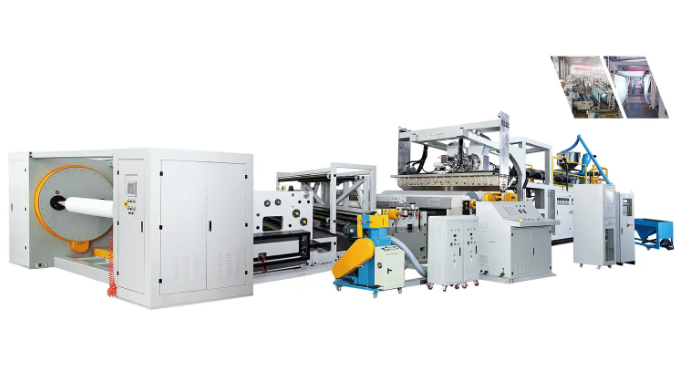
China Leading Cast Film Machine provider
The manufacturing of personal hygiene products, such as baby diapers, adult incontinence pads, and feminine care items, demands raw materials that offer consistent mechanical properties, reliable barrier performance, and soft tactile characteristics. At the foundation of this supply chain is the production of polyethylene (PE) cast films, which serve as crucial backsheets and breathable layers. As downstream consumer brands raise their specifications for film uniformity, gauge accuracy, and processing speeds, specialized manufacturing equipment must evolve to eliminate production defects and reduce material waste. Achieving these tight operational parameters requires a deep integration of heavy mechanical stability and advanced extrusion control. For international component suppliers looking to stabilize their high-volume output, choosing to source hardware from a recognized China Leading Cast Film Machine provider guarantees that their extrusion systems fulfill strict industry benchmarks and maintain prolonged runtime profiles.
The efficiency of high-speed cast film lines relies heavily on uniform polymer melting, precise die lip synchronization, and rapid web cooling. By implementing stabilized mechanical structures and adhering to standardized quality control protocols, machinery builders can deliver extrusion lines that run continuously under heavy industrial loads without inducing film tearing or erratic gauge variations.
Mechanical Configuration of High-Speed PE Sanitary Cast Film Lines
The industrial extrusion of high-speed PE sanitary product cast film machines relies on a systematic thermodynamic and mechanical sequence. The process begins with the efficient feeding of raw thermoplastic resins into single or multi-screw extrusion systems. These extruders utilize precisely calibrated heating zones and optimized screw geometries to ensure uniform polymer plastification and homogeneous melt distribution. The molten material is then pushed under stable hydraulic pressure through a high-precision T-die. The internal flow channels of the die are designed to maintain an even velocity profile across the entire web width, which prevents edge-trim fluctuations and variations in film density.
Upon exiting the die lip, the molten film polymer curtain immediately contacts a large-diameter primary cooling roll. This cooling cylinder features an internal internal helical cooling channel system that ensures rapid, uniform thermal transfer across the entire outer shell surface. This quick quenching process is critical for controlling the crystallization rate of the polyethylene resin, directly influencing the final film tensile strength, puncture resistance, and elongation properties. Downstream auxiliary systems, including automated thickness measurement gauges, corona treatment stations, and dual-position turret winding units, work in perfect synchronization to maintain constant web tension from the die exit down to the finished, mill-ready roll.
Addressing Downstream Demands for Material Softness and Gauge Uniformity
Personal care product brands place strict requirements on the physical attributes of packaging and backsheet materials. Films must not only provide a reliable moisture barrier but must also feature tactile softness to improve end-user comfort. The high-speed PE sanitary product cast film machine accommodates these specific product requirements through the integration of texturing rolls and micro-embossing technology. By manipulating the surface finish of the chill roll, the extrusion line can impart a matte, non-reflective cloth-like finish directly onto the polyethylene substrate during the critical cooling phase.
In addition to surface aesthetics, maintaining strict gauge uniformity remains a persistent challenge during high-speed, continuous operations. Minor deviations in thickness can lead to tension imbalances during downstream printing or conversion steps, resulting in material deformation or machine jams. The automatic die lip adjustment system integrated into modern cast film lines works continuously with online scanning beta or X-ray sensors to measure the full width of the film. If a thickness variation is detected, the automated thermal bolts inside the die lip adjust localized clearances within seconds, maintaining a highly uniform gauge distribution and significantly reducing scrap rates for high-volume conversion operations.
Engineering Versatility for Diverse Structural Cast Film Requirements
The expanding variety of consumer hygienic products requires production machinery capable of switching between different film formulations and multi-layer structural configurations without extensive mechanical retrofitting. Modern sanitary film production frequently utilizes multi-layer co-extrusion architectures, where different resin blends are combined in a feedblock before reaching the die. This allows producers to create films with distinct functional properties, such as a soft tactile layer on one side combined with a high-tensile core layer for structural integrity.
Adjusting to these varying processing conditions requires precise control over screw rotation speeds, barrel temperature profiles, and winder tension profiles. Advanced automation control desks allow processing engineers to save product recipes, enabling rapid product transitions between thin backsheet films and heavier barrier substrates. This emphasis on adaptable engineering configurations makes it highly practical for international manufacturing divisions to collaborate with a China Best Cast Film Machine Manufacturer capable of modifying mechanical footprints, chilling capacities, and slitting configurations to align with pre-existing factory spaces and strict regional electrical safety regulations.
Standardized Assembly Infrastructure and Quality Inspection Regimes
The fabrication of heavy-duty extrusion machinery demands an established manufacturing infrastructure, specialized machining tools, and structured quality verification systems. Ningbo Nuoda Machinery Co., Ltd. operates a dedicated production facility equipped with heavy crane systems, high-precision boring mills, and dynamic balancing testing rigs for large-scale cooling rolls. By maintaining direct ownership over critical structural fabrication stages, the engineering teams can enforce strict oversight on structural welding integrity, component alignment tolerances, and internal pipe polishing.
Operating under a verified ISO9001 quality management framework ensures that every phase of machine assembly proceeds according to documented engineering specifications. From the initial inspection of raw alloy steel forgings to final dry-run factory testing of the main extrusion assembly, this thorough approach minimizes mechanical vibration and ensures long-term operational reliability. Global buying associations seeking to mitigate procurement risks and secure structural performance parameters often prioritize a certified High Quality Cast Film Machine supplier from China that provides detailed component tracking, structural calculations, and comprehensive technical documentation to simplify local factory installation and field commissioning.
Global Market Visibility and Practical Industry Engagement
The international market for plastic extrusion equipment is moving steadily toward higher production outputs, lower energy consumption per ton of finished film, and intelligent line integration. Modern film producers no longer evaluate extruders as standalone components; instead, they require synchronized production systems that communicate seamlessly with material blending platforms and automated warehouse systems. To keep pace with these operational demands, machinery builders must engage with international engineering associations and exhibit at major trade shows to study practical processing problems.
Participating regularly in prominent industrial trade events, such as CHINAPLAS and other international plastics technology exhibitions, provides an essential platform for analyzing field challenges across different global regions. These interactions allow technical departments to re-engineer auxiliary systems, such as optimizing air knife cooling efficiency for factories operating in tropical high-humidity climates or developing specialized inline edge-trim recycling systems that refeed scrap material directly back into the extruder hopper. Continuous field feedback ensures that the mechanical development of the cast film lines remains focused on solving real-world production limitations.
Project Planning and the Foundations of Processing Stability
The return on investment for a high-speed film manufacturing facility depends heavily on the technical design decisions made during the initial equipment engineering phase. Implementing a cast film line that lacks adequate cooling roll capacity or precise die lip regulation leads to recurring operational problems, including film wrinkling, gauge inconsistency, and high energy consumption. Selecting a machinery partner with proven manufacturing history and verified component choices protects capital investments and delivers stable production outputs over decades of continuous operation.
As regulatory agencies continue to increase standards for raw material consistency and occupational safety within the hygiene sector, installing robust, compliant extrusion machinery becomes a necessary condition for long-term commercial success. Technical diligence during the equipment build phase guarantees that the processing line maintains its structural integrity and processing precision throughout its working lifespan.
Advanced engineering practices ensure that industrial processing lines minimize waste while optimizing production yield. By refining the aerodynamics within the drying chamber and utilizing reliable atomization components, modern manufacturing plants can reliably achieve precise material specifications. For a detailed look at compliant thermal processing machinery and customized powder engineering solutions, visit the official corporate platform at https://www.nuoda-machinery.com/
Quanzhou Nuoda Machinery Co., Ltd.
Quanzhou Nuoda Machinery Co., Ltd.
+86 595 8595 6056
nuoda@qznuoda.com
Legal Disclaimer:
EIN Presswire provides this news content "as is" without warranty of any kind. We do not accept any responsibility or liability for the accuracy, content, images, videos, licenses, completeness, legality, or reliability of the information contained in this article. If you have any complaints or copyright issues related to this article, kindly contact the author above.
